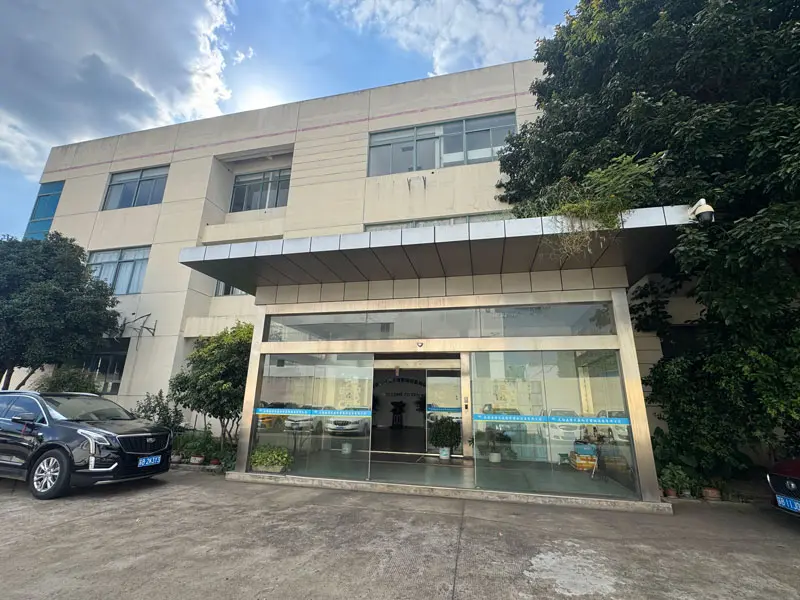
JX Roll Forming provides Solar Racking & PV Support Channel Forming Solutions. The overview below covers profiles, specifications and selection logic.
A solar PV support channel roll forming line produces the strut, C channel and top hat profiles that carry modules on ground-mount and rooftop racking. JX builds these lines in four configurations for 1.5–3.0 mm galvanized, PPGI or carbon steel coil, at 0–30 m/min nominal forming speed, with holes punched in line to your drawing.
Four profile families cover most racking designs. The strut line covers the full 41-series range, the two C channel lines split between a standard and a wider steel support section, and the top hat line closes the roof deck for trapezoidal panel systems.
| Configuration | Profile range | Coil thickness | Forming stations | Nominal speed |
|---|---|---|---|---|
| Solar Strut Channel | 41×21, 41×41, 41×52, 41×62, 41×72, 41×82 mm | 1.5–2.5 mm | 22 | 0–30 m/min |
| Solar C Channel | 60–120 mm width, 40–60 mm height | 1.5–2.5 mm | 15 | 0–30 m/min |
| C Channel Steel Support | 30–150 mm width, 30–60 mm height | 1.5–3.0 mm | 16 | 0–30 m/min |
| Solar Top Hat Channel | Top hat section to your drawing | 1.5–3.0 mm | 18 | 0–30 m/min |
The racking design usually fixes the choice before the machine does. Strut channel takes the point loads — module clamps, mid-clamps and bracing connections land on a 41 mm face, which is why that section runs through 22 stations to hold the return legs and knockouts. C channel works as purlin and rail where the load spreads over a longer span, and a 15-station line forms it without the knockout tooling. Top hat channel is specified by the panel system rather than by span, so the profile comes from the roof manufacturer's drawing.
When a catalogue carries more than one family, the practical question is not which machine is better but whether one line can be re-tooled between sections or two dedicated lines are cheaper to run. A dedicated line shortens changeover and holds a steadier tolerance; a re-toolable line costs less capital but adds setup time to every batch.
All four configurations handle galvanized coil, PPGI and carbon steel in the same specification range: yield strength 250–550 MPa, tensile strength G350–G550. Coil thickness is what varies — 1.5–2.5 mm on the strut and standard C channel lines, up to 3.0 mm on the top hat and steel support lines. Rollers are Cr12MoV in a cast frame structure, driven through gearboxes, with Delta PLC and Yaskawa inverters on a 380 V 50 Hz three-phase supply.
Nominal forming speed is 0–30 m/min across the range. Actual output depends on the hole pattern: more holes per section means more stops in the punching cycle, so a plain channel with two holes runs closer to the top of the range than a bracket-heavy strut section does.
A solar channel line is quoted against a specification, not a catalogue number. Four variables move the price most:
Send the profile drawing, coil specification and target output per shift. The configuration and price follow from those three inputs, and the quotation states which specification each part of the price covers.
An engineer travels to your factory for installation and commissioning if required, and the line carries service for its working life. Quality problems that are not caused by operator error are handled under that service commitment.
Q: What coil thickness can a solar support channel line form?
A: 1.5–2.5 mm on the strut and standard C channel lines, up to 3.0 mm on the top hat and steel support C channel lines.
Q: Can one machine produce several channel sizes?
A: Yes. The strut line covers 41×21 to 41×82 mm, and the steel support C channel covers 30–150 mm width and 30–60 mm height. Holes are punched to your drawing.
Q: What steel grades are supported?
A: Galvanized coil, PPGI and carbon steel with yield strength 250–550 MPa and tensile strength G350–G550.
Q: What is the delivery time?
A: 60 days after contract confirmation for the configurations listed on this page.
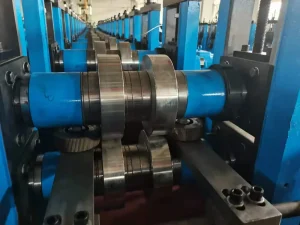
Roll forming machine for C channels on solar panel brackets, thickness 1.5-2.5mm, line speed up to 20 m/min. 30+ years factory, OEM & custom available.
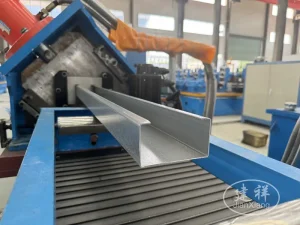
Roll forming machine for C channel supports in solar ground mounting, thickness 1.5-3.0mm, speed up to 47 m/min. 30+ years factory, OEM & custom available.
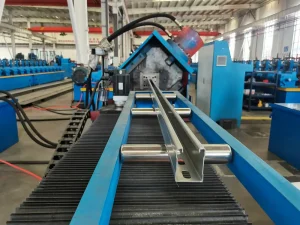
Roll forming machine for solar strut channels, solid or slotted, with German Copra rollers quenched to HRC 58-62. 30+ years factory, OEM & custom available.
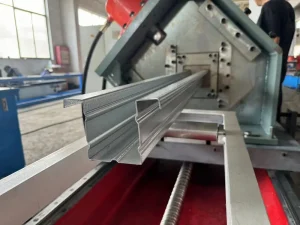
Forms top hat channels for solar strut channel installation with servo feeder, punch press and full PLC control. 30+ years factory, OEM & custom available.
Tell us your profile, material, and production target — our engineering team will prepare a customized solution and quotation.