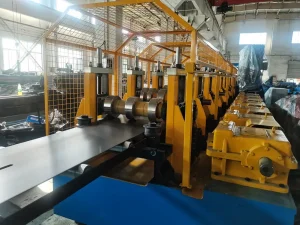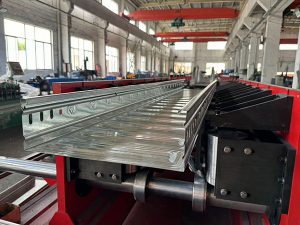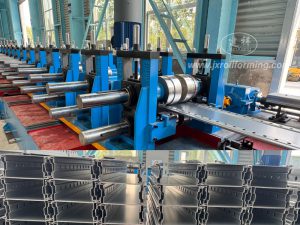
Highway guardrail is the anti-collision facility that keeps runaway vehicles on the road — and the specification is set by the road: two-wave W-beam for the majority of roads, three-wave Thrie-beam where higher impact levels are required. A guardrail line has to produce both to a traffic-safety standard, which shapes what you should check in the machine.
1. W-beam vs Thrie-beam
W-beam (two waves) is the standard guardrail for rural roads, urban roads and lower-speed highways, where traffic is moderate and the risk of large-vehicle accidents is lower. Thrie-beam (three waves) is specified where higher collision energy has to be absorbed. Our lines produce both wave types — confirm the wave types of the contracts you are bidding when you request a quotation.
2. Punching: the part that decides acceptance
Guardrail panels carry installation hole patterns — and the panels are inspected. The line pairs a 315-ton press punch with a 120-ton hydraulic punch on a fast feed system, so the hole patterns come out clean and consistent on every panel. Send the drawings of the hole patterns your contracts require; the punch tooling is built to them.
3. Speed and material
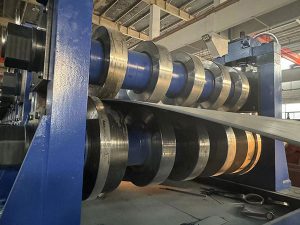
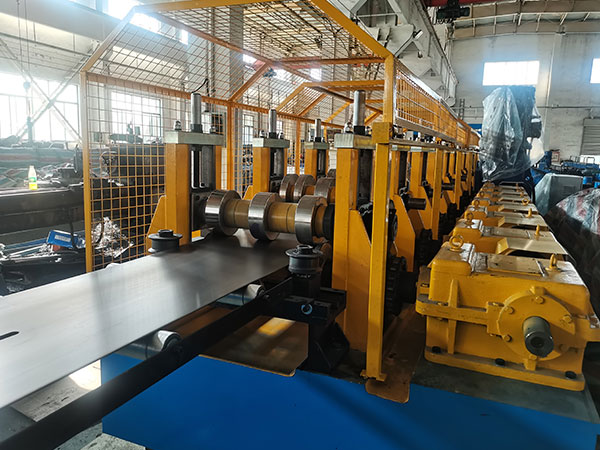
The line runs carbon steel coil and forms at 3–4 panels per minute, depending on the punch pattern. With 15 forming stations, Cr12Mov rollers on a casting frame and gearbox drive, the panel geometry stays consistent over the life of the tooling — which is what the road inspection side of your customer cares about.
FAQ
- Q: What is the delivery time? A: 80 days after contract confirmation.
- Q: What is the machine speed? A: 3–4 panels per minute, depending on the punching requirement.
- Q: Which guardrail types can it make? A: Two-wave W-beam and three-wave Thrie-beam, to the road-class specification.
Send us the guardrail drawings of your target market, and we will confirm the line and send a quotation. View our highway guardrail roll forming machine.