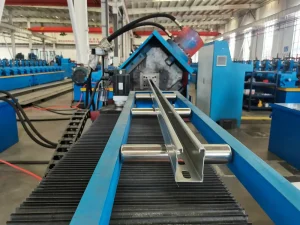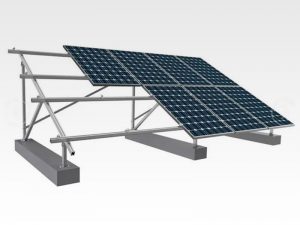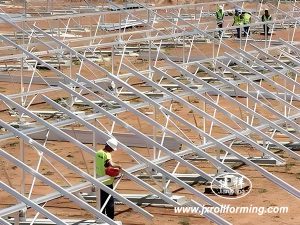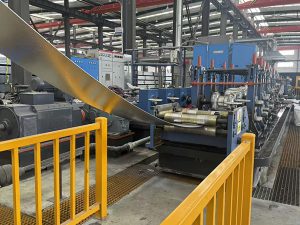
Solar strut channel — the solid and slotted 41-series profiles — is the backbone of rooftop solar racking. If you are planning a channel production line, these six factors decide whether the machine fits your market, your coil and your factory.
1. Profile range: start from the sizes your market buys
The 41-series (41×21 to 41×82 mm) is the de-facto standard worldwide, and one line covers the full range. Before you order, list the two or three sizes your customers actually buy and the punch or slot pattern for each — the die set is built around that list. Solid and slotted strut channel both come from the same line family, but slotted tooling changes the punch sequence, so specify it from day one. Our strut channel selection guide covers the size and material ranges in more detail.
2. Material and thickness set the press tonnage
Standard strut channel is rolled from 1.5–3.0 mm galvanized, PPGI or carbon steel coil (G350–G550). The thicker the coil, the more tonnage the punch and the forming stations need — this is the biggest hidden price factor in the machine. If your market is moving to zinc-aluminum-magnesium coil, check the supplier’s track record with coated coils before you sign: we compare the coatings in our ZAM vs hot-dip galvanized guide.
3. Punch layout: inline press or post punch
An inline press punch is the classic layout — simple and proven, but it lengthens the line. A post hydraulic punch stands behind the line and picks up the formed channel, punching up to 20 holes in one stroke. It saves factory floor space, which matters when the plot is fixed. We have run both options for customers in India; here is a test run of the post-punch version.
4. Speed and automation decide your cost per metre
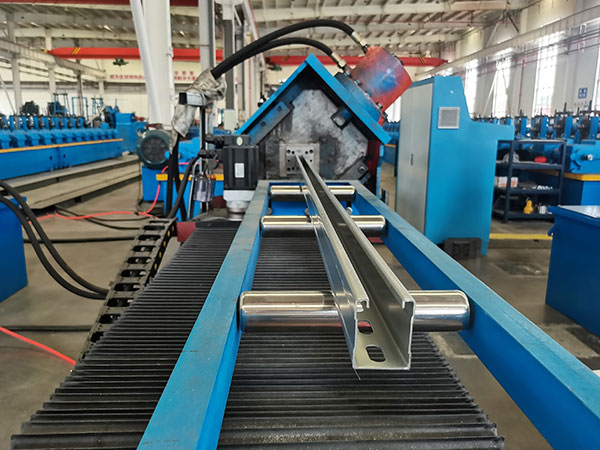
A standard line forms at 0–30 m/min; at two shifts that comfortably exceeds 600,000 metres per month. The options that actually move your labour cost are the servo feeder (steady coil feed without manual tending), the hydraulic servo follow-cut (exact lengths at line speed) and the auto stacker (no manual handling at the end of the line). On our lines you set the length and quantity on the touchscreen and the machine runs on its own.
5. Ask about the steel of the machine
These items do not show up in a photo, and they decide how the line performs in year three: roller material (we use Cr12Mov), station structure (a casting frame keeps the profile tolerances stable shift after shift), drive type (gearbox) and the electricals (Delta PLC with Yaskawa inverters on our standard line).
6. Delivery and commissioning
Standard delivery is 60 days after contract confirmation, and we send an engineer for installation and commissioning on request. One more thing to ask any supplier: a test run with your own profile and coil before the final payment. It is the cheapest risk reduction in the whole purchase.
FAQ
- Q: How many sizes can one machine produce? A: The full 41-series — 41×21 / 41×41 / 41×52 / 41×62 / 41×72 / 41×82 mm, 1.5–3.0 mm thick, with punch holes to your drawing.
- Q: What is the delivery time? A: 60 days after contract confirmation.
- Q: Can the line run my coil type? A: Galvanized, PPGI and carbon steel coil, G350–G550. Send us your coil spec and we will confirm the configuration.
Send us your target profiles, punch drawing, coil type and monthly output — start the conversation and we will reply with a full line configuration and quotation. View our solar strut channel roll forming machines.