Roll-formed steel formwork is replacing wood and aluminum formwork on large projects: compared with wood, it saves about 30% of labour cost and 50% of material, and a set can be reused 200+ times. If you supply high-rise, bridge or infrastructure builders, this is a product line with real margins. Here is how to choose the machine.
1. What the machine makes
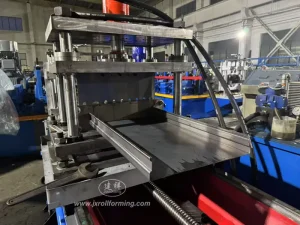
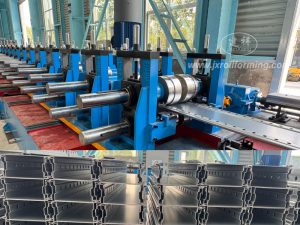
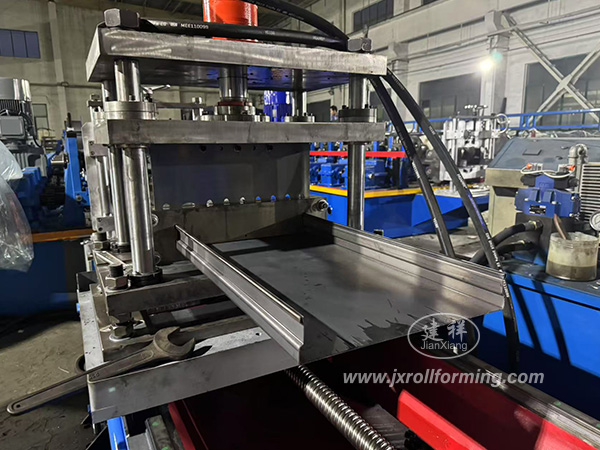
Building steel formwork panels — the mold that shapes and supports concrete until it cures — for high-rise cores and slabs, bridge piers and girders, tunnel and underground structures, industrial buildings and water structures. The panels are rolled, punched for bolt holes and cut to length on one line.
2. Material range
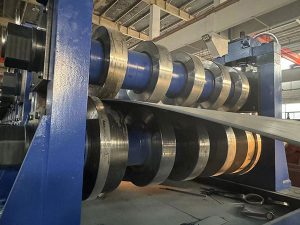
The line runs galvanized, PPGI and carbon steel coil, 1.5–3.0 mm thick, yield strength 250–550 MPa (G350–G550). The gauge you plan to run is the first thing to agree with the supplier — it sets the roller and punch design.
3. Line configuration
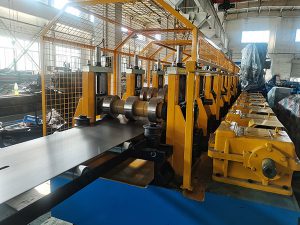
The standard flow: 5-ton decoiler, main roll forming machine (22 stations), press punch, hydraulic servo follow-cut, outer table. 22 kW main motor, Cr12Mov rollers, casting frame, gearbox drive, Delta PLC with Yaskawa inverter. You set the panel length and quantity on the touchscreen and the line runs automatically.
| Forming stations | 22 |
|---|---|
| Forming speed | 0–30 m/min |
| Main motor | 22 kW |
| Material | GI / PPGI / carbon steel, 1.5–3.0 mm, G350–G550 |
| Punching | Press punch, hole pattern to your panel design |
| Factory space | About 25 m × 30 m |
4. Delivery and track record
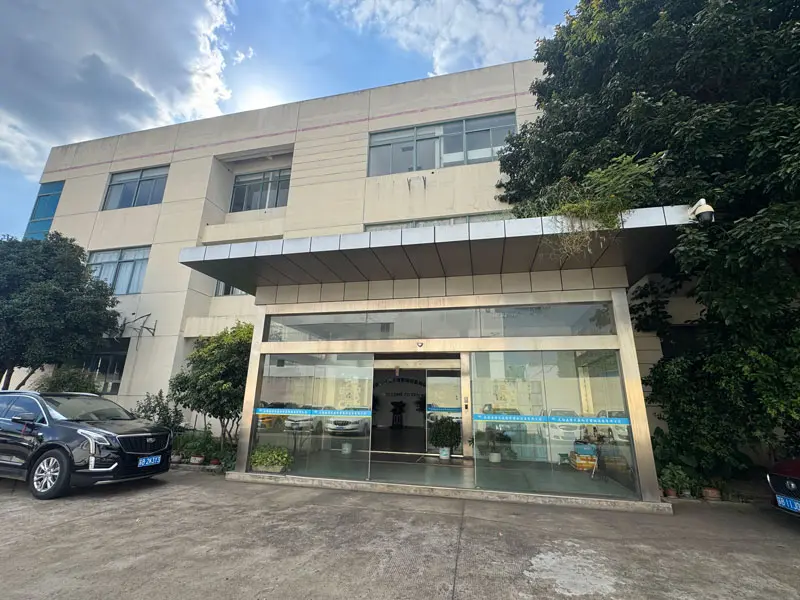
Standard delivery is 60 days after contract confirmation, with engineer installation and commissioning on request. More than 80 formwork lines are running for customers in China and abroad, and the majority of China’s steel formwork manufacturers run our machines.
What drives the price of a formwork roll forming line
The case for steel formwork rests on 200+ reuses, so the machine is judged against the cost of the panels it replaces rather than against a competitor’s price list. Four items set the number:
- Panel profile — the number of bends in the panel sets the station count, and 22 stations is the platform for the standard range.
- Coil thickness — 3.0 mm at G550 loads the 22 kW drive and the stands more than 1.5 mm at G350.
- Hydraulic punching and cutting — both run in line, and their size follows the hole and cut profile on your panel drawing.
- Line scope — a stand-alone machine and a production line built on the same forming platform are quoted differently, because the handling and control scope differs.
Send the panel drawing and the intended plant layout. The scope is defined from the drawing, and the quotation separates the forming platform from the handling equipment around it.
FAQ
- Q: What is the delivery time? A: 60 days after contract confirmation.
- Q: What is the machine speed? A: 0–30 m/min, depending on the punching requirement.
- Q: How much factory space is needed? A: About 25 m (length) × 30 m (width).
If your projects specify 500 MPa-class steel, also read our guide to high strength alloy steel formwork production lines. Send us your panel design and coil spec for a configuration and quotation. View our steel formwork roll forming machine.