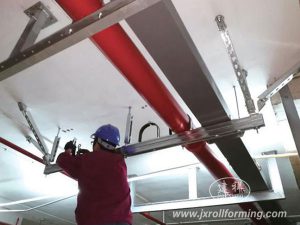
Unistrut seismic bracing channels are what keep pipes, fire sprinklers and hanging installations in place during an earthquake. Because the product is code-driven, the buying decision is different from a standard channel line — the specs have to match the seismic standards of the markets you sell into.
1. Profile range follows the code
The line produces the full 41-series — 41×21 / 41×41 / 41×52 / 41×62 / 41×72 / 41×82 mm — in 1.5–3.0 mm, and any size or punch/slot pattern can be produced to your drawing. Seismic markets specify slot patterns carefully, so send the standard you are building to (and the drawings that come with it) when you request a quotation.
2. Why this line is bigger than a standard channel line
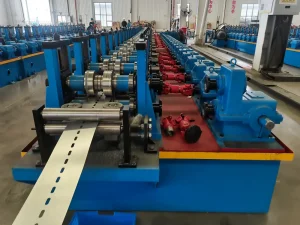
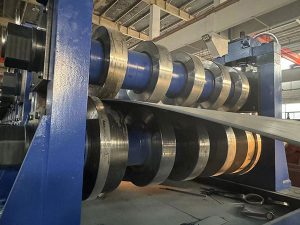
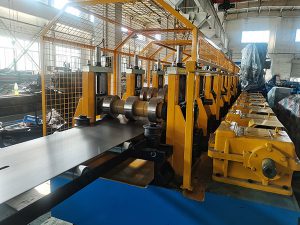
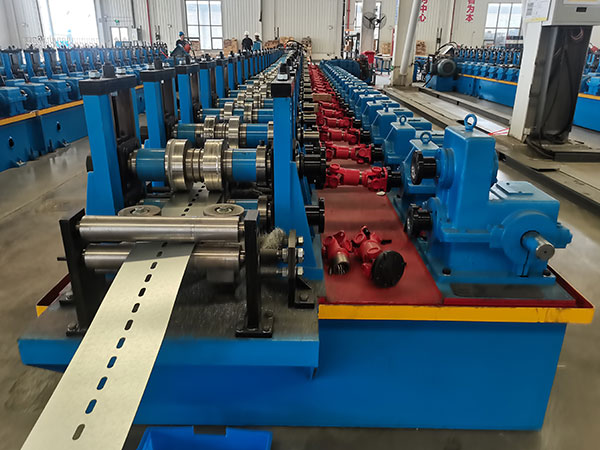
Bracing channel carries real structural load, which is why the line is built heavier: 30 forming stations, a 55 kW main motor, Cr12Mov rollers on a casting frame. The standard flow runs through a 5-ton decoiler, servo feeder, punch press, the main forming machine and a hydraulic servo follow-cut to the outer table. If you are comparing quotations, compare station count and motor power first — they are where the differences between lines show up.
3. Space and capacity
The line needs about 45 m × 30 m of factory area. Nominal forming speed is 0–30 m/min, depending on the punch pattern of the day.
4. Who buys this line
Channel producers entering seismic markets — bracing for piping and fire sprinkler systems in earthquake-prone regions is a product with higher margins than commodity channel. If you are not sure how the end product is used, start with our installation guide for unistrut seismic bracing systems; a line we installed in Thailand shows a complete installation.
What drives the price of a seismic bracing line
This line carries 30 forming stations and a 55 kW main motor, and both are consequences of what bracing sections require. The price splits across four items:
- Station count — 30 stations against 22 on a standard strut line, and each station is another pair of Cr12MoV rolls.
- Hole pattern — slotted and elongated holes for brace connections take longer in the punch cycle than round holes, and often need dedicated tooling.
- Coil thickness — 3.0 mm at G550 is what sets the 55 kW motor and the heavier stand structure.
- Qualification requirements — where the market requires tested bracing assemblies, the section and hole pattern are fixed by the test report, so specify them before the roll set is cut.
Send the section drawings, the hole pattern and the code or test report the assembly has to satisfy. The station layout is worked out from those, and the quotation states the scope in full.
FAQ
- Q: How many sizes can one machine make? A: The full 41-series, 41×21 to 41×82 mm, 1.5–3.0 mm, any size or punch pattern to your drawing.
- Q: What is the delivery time? A: 60 days after contract confirmation.
- Q: How much factory space is needed? A: About 45 m (length) × 30 m (width).
Send us the seismic standard and drawings of your target market, and we will confirm the line configuration. View our unistrut seismic bracing roll forming machine.